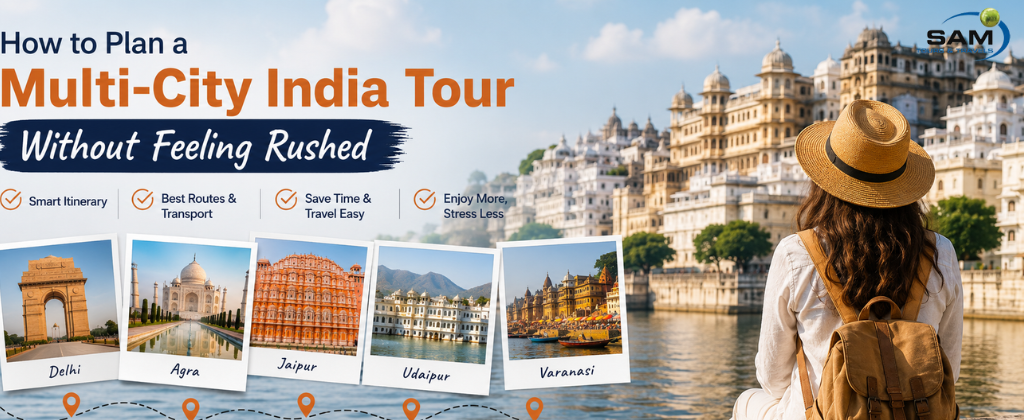
India is one of the world’s most diverse travel destinations, offering majestic palaces, ancient temples, bustling cities, peaceful mountains, tropical beaches, wildlife sanctuaries, and vibrant festivals. With so much to see, many travelers try to fit too many destinations into a single itinerary. Unfortunately, this often results in long travel days, exhaustion, and little time to truly experience each place.
A well-planned multi-city India tour focuses on quality over quantity. Instead of rushing from one city to another, it allows you to enjoy India’s culture, cuisine, architecture, and local experiences at a comfortable pace.
In this guide, you’ll learn how to create a balanced itinerary that maximizes your time while minimizing travel stress.
Why Travelers Feel Rushed in India
Many first-time visitors underestimate India’s size and travel times. Although modern highways, domestic flights, and express trains have made travel easier, distances between destinations can still be significant.
Common planning mistakes include:
- Visiting too many cities in a short period
- Booking back-to-back travel days
- Ignoring local traffic conditions
- Spending only one night in major destinations
- Not allowing time for relaxation
A successful itinerary balances sightseeing with downtime.
Choose One Region Instead of the Entire Country
Instead of trying to cover all of India in one trip, focus on a specific region.
North India
- Delhi
- Agra
- Jaipur
- Ranthambore
- Varanasi
Rajasthan
- Jaipur
- Jodhpur
- Udaipur
- Jaisalmer
- Pushkar
South India
- Kochi
- Munnar
- Alleppey
- Madurai
- Chennai
Himalayan Region
- Shimla
- Manali
- Dharamshala
- Rishikesh
Exploring one region reduces travel time and provides a richer cultural experience.
Spend At Least Two Nights in Every Major Destination
One of the biggest mistakes travelers make is changing hotels every day.
A better approach is:
- Delhi – 2 Nights
- Agra – 1 Night
- Jaipur – 2 Nights
- Udaipur – 2 Nights
- Varanasi – 2 Nights
This allows time to enjoy attractions without feeling hurried.
Avoid Consecutive Long Travel Days
Long drives or train journeys can be tiring.
Whenever possible:
- Combine flights with road travel.
- Take morning departures.
- Keep sightseeing light after long journeys.
- Include rest days during longer itineraries.
Your vacation should be enjoyable—not exhausting.
Plan Around Travel Distances
Understanding approximate travel times helps you create a realistic itinerary.
| Route | Approximate Time |
|---|---|
| Delhi → Agra | 3–4 Hours |
| Agra → Jaipur | 4–5 Hours |
| Jaipur → Udaipur | 6–7 Hours |
| Delhi → Varanasi (Flight) | 1.5 Hours |
| Kochi → Munnar | 4 Hours |
Avoid planning multiple attractions immediately after a long transfer.
Mix Famous Attractions with Local Experiences
Don’t spend every day visiting monuments.
Balance your itinerary with experiences such as:
- Walking through heritage markets
- Cooking classes
- Village tours
- Food walks
- Sunset boat rides
- Cultural performances
- Photography tours
- Local artisan workshops
These moments often become the highlights of a trip.
Use Domestic Flights for Longer Distances
India has an extensive domestic flight network connecting major cities.
Flying between distant destinations saves valuable vacation time and reduces fatigue.
Examples include:
- Delhi to Varanasi
- Jaipur to Mumbai
- Kochi to Bengaluru
- Chennai to Goa
Travel During the Right Season
Weather significantly affects travel comfort.
October to March
Ideal for North India and Rajasthan.
April to June
Perfect for Himalayan destinations.
July to September
Best for Kerala’s lush landscapes and monsoon experiences.
Choosing the right season makes sightseeing much more enjoyable.
Hire a Private Driver
For multi-city road trips, a private chauffeur offers several advantages:
- Flexible schedule
- Comfortable transportation
- Local knowledge
- Safe driving
- Easy hotel transfers
- Stops at hidden attractions
This option is especially popular among international travelers.
Leave Free Time in Your Schedule
Not every hour needs to be planned.
Use free time to:
- Relax at your hotel
- Explore local cafés
- Visit nearby markets
- Enjoy spa treatments
- Watch sunsets
- Discover neighborhoods on foot
A slower pace often leads to more memorable travel experiences.
Sample 10-Day Multi-City India Tour
Day 1–2
Delhi
Day 3
Agra
Day 4–5
Jaipur
Day 6–7
Udaipur
Day 8–10
Varanasi
This itinerary offers a balanced mix of history, culture, architecture, spirituality, and relaxation without excessive travel.
Expert Tips for a Stress-Free India Tour
- Book hotels close to major attractions.
- Travel with light luggage.
- Keep copies of important documents.
- Stay hydrated during sightseeing.
- Avoid overloading each day with activities.
- Leave room for spontaneous discoveries.
- Use local guides for historical sites.
- Book transportation in advance during peak season.
Why Choose a Customized Multi-City India Tour?
Every traveler has different interests, budgets, and travel styles. A customized itinerary allows you to focus on what matters most—whether that’s heritage, wildlife, spirituality, luxury, food, or photography.
Instead of following a fixed schedule, you can travel at your own pace, spend more time in destinations you love, and skip places that don’t match your interests.
Frequently Asked Questions
How many cities should I visit in a two-week India tour?
For a relaxed experience, visiting 4–6 cities is ideal, depending on travel distances and your interests.
What is the best way to travel between Indian cities?
Private cars are excellent for nearby destinations, while domestic flights are the fastest option for longer distances.
When is the best time for a multi-city India tour?
October to March offers the most pleasant weather for exploring most parts of India.
Is a customized India tour better than a fixed itinerary?
Yes. Customized tours let you travel at your own pace, include destinations that match your interests, and avoid unnecessary rushing.