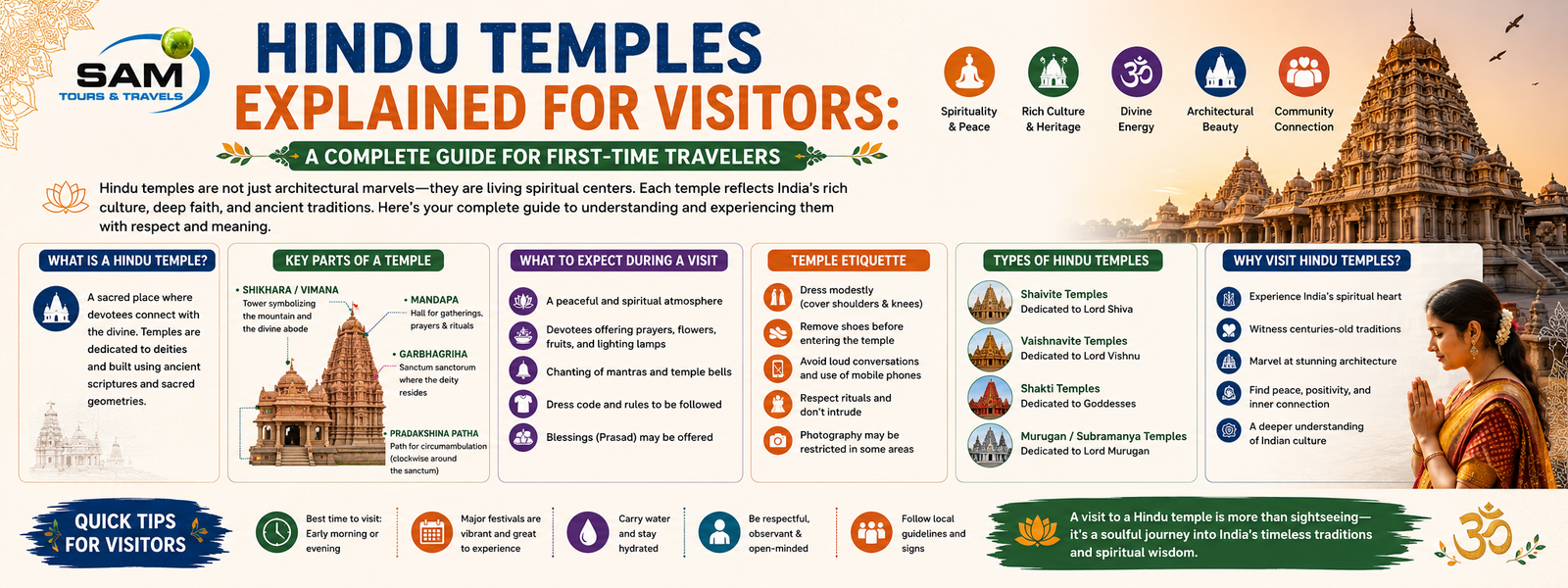
Planning a trip to India? Visiting Hindu Temples is one of the best ways to experience the country’s rich spiritual and cultural heritage. These sacred places are not only centers of worship but also showcase incredible architecture, history, art, and traditions. For first-time visitors, understanding the meaning and customs associated with Hindu temples can make the experience more respectful and rewarding.
This guide explains everything tourists need to know before visiting Hindu Temples in India.
What Are Hindu Temples?
Hindu Temples are places of worship dedicated to various Hindu deities. They serve as spiritual centers where devotees pray, participate in rituals, and celebrate religious festivals.
Unlike museums or monuments, temples are active places of worship. Therefore, visitors should approach them with respect and cultural awareness.
Across India, you will find temples ranging from small village shrines to massive architectural wonders that attract millions of pilgrims each year.
Why Hindu Temples Are Important
Temples play a central role in Hindu religious life.
People visit temples to:
- Offer prayers
- Seek blessings
- Celebrate festivals
- Participate in rituals
- Mark important life events
In addition, temples often serve as community gathering places and cultural landmarks.
Understanding Temple Architecture
One of the most fascinating aspects of Hindu Temples is their architecture.
Although designs vary by region, many temples include:
Entrance Gateway
Many temples feature impressive gateways decorated with carvings and sculptures.
Prayer Hall
Visitors gather here before approaching the main shrine.
Sanctum
This is the most sacred part of the temple and houses the main deity.
Temple Courtyard
Many larger temples include open courtyards where devotees gather during festivals and ceremonies.
As a result, every part of the temple has spiritual and symbolic significance.
Common Deities Found in Hindu Temples
Different temples are dedicated to different gods and goddesses.
Popular deities include:
- Lord Shiva
- Lord Vishnu
- Goddess Lakshmi
- Lord Ganesha
- Goddess Durga
- Lord Krishna
- Lord Rama
- Goddess Saraswati
Therefore, the rituals and celebrations may vary depending on the deity worshipped at the temple.
What Visitors Should Wear
Modest clothing is recommended when visiting Hindu Temples.
Good choices include:
For Women
- Long dresses
- Skirts below the knee
- Loose trousers
- Tops covering the shoulders
For Men
- Long trousers
- Shirts or t-shirts with sleeves
- Traditional attire if desired
Avoid revealing clothing whenever possible.
Why Shoes Must Be Removed
One of the most important customs is removing footwear before entering the temple.
This practice symbolizes:
- Respect
- Cleanliness
- Spiritual purity
Consequently, visitors should wear shoes that are easy to remove.
Temple Etiquette for Tourists
Following basic etiquette helps ensure a positive experience.
Remember to:
- Speak quietly.
- Follow posted instructions.
- Respect worshippers.
- Turn mobile phones to silent mode.
- Avoid touching sacred objects unless permitted.
Moreover, observing local behavior can help you understand appropriate conduct.
Can Tourists Enter Hindu Temples?
Most Hindu Temples welcome visitors regardless of nationality or religion.
However:
- Some temples restrict access to certain areas.
- A few temples may have entry rules based on religious traditions.
- Photography may not be permitted inside sacred areas.
Therefore, always check local guidelines before entering.
Temple Rituals You May Observe
Visitors often witness a variety of religious ceremonies.
Common rituals include:
Aarti
A devotional ceremony involving lamps, prayers, and chanting.
Offerings
Devotees may offer flowers, fruits, or sweets to the deity.
Bells and Chanting
Many temples feature devotional music, chanting, and ringing bells.
These rituals create a unique spiritual atmosphere for visitors.
Famous Hindu Temples in India
India is home to thousands of temples.
Some of the most famous include:
Kashi Vishwanath Temple
Located in Varanasi.
Akshardham Temple
Located in Delhi.
Meenakshi Temple
Located in Madurai.
Jagannath Temple
Located in Puri.
Somnath Temple
Located in Gujarat.
These temples attract millions of visitors each year.
Tips for First-Time Visitors
To make your visit more enjoyable:
- Dress modestly.
- Remove shoes before entering.
- Carry a small bag for valuables.
- Follow local customs.
- Ask questions respectfully.
- Arrive early to avoid crowds.
As a result, you’ll enjoy a smoother and more meaningful experience.
Common Mistakes Tourists Should Avoid
Try to avoid:
- Wearing inappropriate clothing
- Speaking loudly
- Ignoring photography restrictions
- Entering restricted areas
- Interrupting ceremonies
Fortunately, most mistakes are easy to avoid with a little awareness.
Conclusion
Visiting Hindu Temples offers travelers an opportunity to experience India’s spiritual traditions, architectural beauty, and cultural heritage. By understanding temple customs, dressing appropriately, and respecting local practices, visitors can enjoy a deeper and more meaningful connection with these sacred spaces.
Whether you’re exploring the ancient temples of Varanasi, the grand complexes of South India, or the stunning shrines of Rajasthan, temple visits often become one of the most memorable parts of a journey through India.
Planning an unforgettable India Tour? Whether you’re looking for a luxury holiday, a cultural journey, a wildlife adventure, or a fully personalized itinerary, our expert travel team can create the perfect experience for you. Explore our wide range of private and customized India tour packages designed to match your interests, budget, and travel style.
👉 Read More: India Tour – Private & Customized India Tour Packages