Visiting India for the first time? Understanding India Local Customs can help you have a more enjoyable and respectful travel experience. India is a culturally diverse country with deep-rooted traditions, religious practices, and social etiquette. While locals are generally welcoming and understanding of visitors, showing respect for local customs can help you build positive connections and avoid cultural misunderstandings.
This guide explains the most important cultural practices every tourist should know before traveling to India.
Why Understanding India Local Customs Matters
India is home to many religions, languages, and traditions. As a result, customs can vary from one region to another.
Respecting India Local Customs helps you:
- Create positive interactions
- Show cultural awareness
- Avoid unintentional mistakes
- Enjoy a more authentic travel experience
- Gain local trust and respect
Fortunately, most customs are easy to follow.
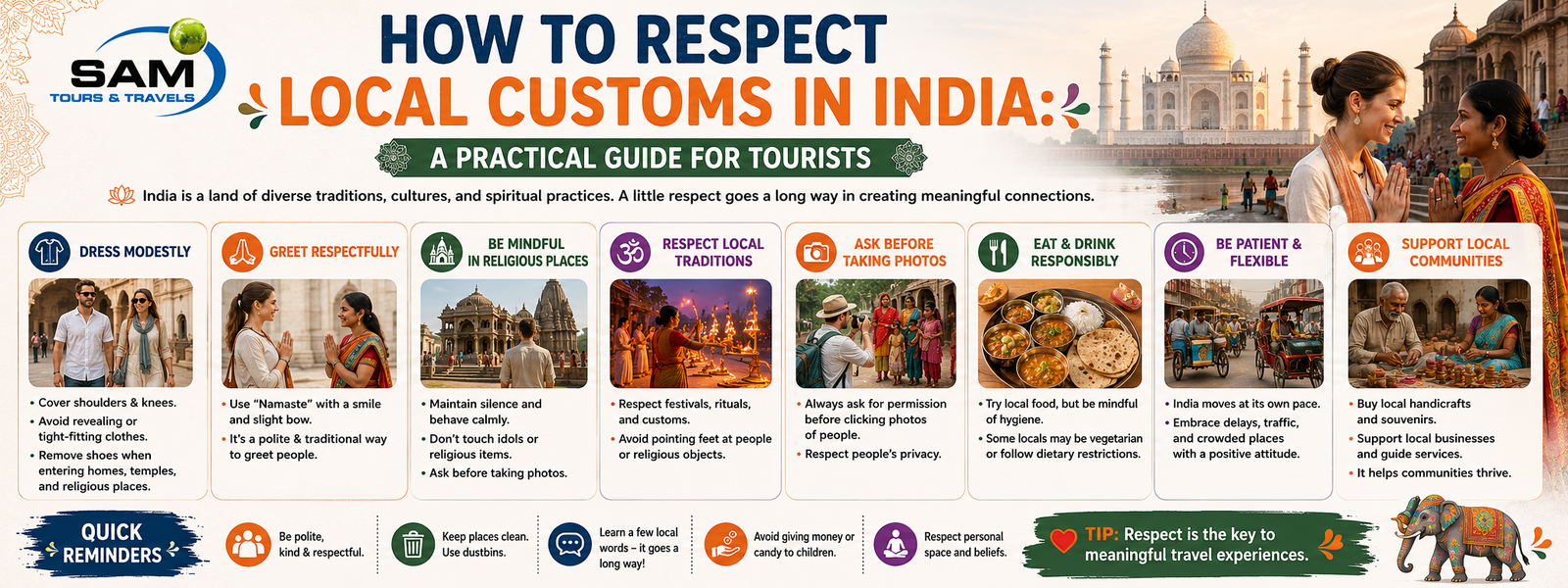
Dress Modestly at Religious Sites
Many temples, mosques, gurudwaras, and other places of worship expect visitors to dress respectfully.
When visiting religious sites:
- Cover your shoulders
- Wear clothing below the knees
- Avoid revealing outfits
- Follow local dress requirements
In some locations, head coverings may also be required.
Remove Shoes Before Entering Sacred Places
One of the most common India Local Customs is removing shoes before entering places of worship.
You may be asked to remove footwear at:
- Temples
- Gurudwaras
- Some mosques
- Certain traditional homes
Therefore, wearing easy-to-remove shoes can be helpful while sightseeing.
Respect Religious Practices
Religion plays an important role in everyday life for many Indians.
Visitors should:
- Remain quiet during ceremonies
- Follow instructions from staff
- Avoid interrupting prayers
- Observe respectfully from a distance
Even if you do not participate, showing respect is always appreciated.
Ask Before Taking Photographs
India offers countless photography opportunities.
However, it is polite to ask permission before photographing:
- Local people
- Religious ceremonies
- Monks or spiritual leaders
- Children
As a result, you are more likely to receive a positive response.
Use Polite Greetings
Simple greetings can leave a positive impression.
The traditional greeting “Namaste” is widely recognized and appreciated.
To greet someone:
- Place your palms together
- Offer a slight nod
- Say “Namaste”
Meanwhile, handshakes are common in many urban areas and business settings.
Show Respect to Elders
Respect for older people is deeply valued in Indian society.
When interacting with elders:
- Be polite
- Listen attentively
- Use respectful language
- Avoid interrupting conversations
These small gestures are often appreciated.
Be Mindful of Public Behavior
Public behavior standards may differ from those in other countries.
Tourists should:
- Avoid loud arguments
- Dress appropriately
- Respect personal and religious spaces
- Maintain polite conduct
Consequently, you’ll blend more comfortably into local environments.
Understand Dining Etiquette
Food is an important part of Indian culture.
Helpful dining tips include:
- Wash your hands before meals
- Accept hospitality graciously
- Try local dishes respectfully
- Wait until everyone is served
In addition, some people may traditionally eat with their right hand.
Visit Markets Respectfully
Local markets are often lively and crowded.
When shopping:
- Bargain politely where appropriate
- Be patient
- Respect vendors
- Avoid aggressive negotiation
A friendly attitude often leads to a better experience.
Respect Local Traditions During Festivals
Festivals are an important part of Indian life.
When attending celebrations:
- Follow local guidance
- Dress appropriately
- Participate respectfully
- Ask questions politely
Moreover, festivals provide excellent opportunities to learn about local culture.
Cultural Differences to Remember
India’s diversity means customs may vary by region.
For example:
- Food traditions differ across states.
- Religious practices vary among communities.
- Languages change from region to region.
Therefore, staying open-minded and adaptable is one of the best approaches.
Common Mistakes Tourists Should Avoid
Try to avoid:
- Entering temples with shoes
- Wearing inappropriate clothing at religious sites
- Taking photographs without permission
- Interrupting ceremonies
- Ignoring local customs
Fortunately, most mistakes can be avoided with basic awareness.
Tips for a Respectful Travel Experience
To make the most of your trip:
- Observe local behavior.
- Ask questions when unsure.
- Follow posted guidelines.
- Respect religious traditions.
- Dress appropriately.
- Be patient and courteous.
Most importantly, approach cultural differences with curiosity and respect.
Frequently Asked Questions
Do I need to wear traditional Indian clothing?
No. However, modest and comfortable clothing is recommended, especially at religious sites.
Should I remove my shoes before entering temples?
Yes. Removing shoes is a common requirement at many places of worship.
Is photography allowed everywhere?
Not always. It is best to ask permission before photographing people or religious ceremonies.
What greeting should tourists use?
“Namaste” is a respectful and widely recognized greeting.
Are customs the same throughout India?
No. Customs vary by region, religion, and community.
Conclusion
Understanding India Local Customs can significantly improve your travel experience. By respecting religious practices, dressing appropriately, using polite greetings, and remaining mindful of local traditions, you’ll enjoy more meaningful interactions throughout your journey.
Whether you’re visiting the Taj Mahal, exploring Rajasthan, attending a festival, or discovering Kerala’s culture, a respectful approach will help you connect with local communities and create lasting memories.
Planning an unforgettable India Tour? Whether you’re looking for a luxury holiday, a cultural journey, a wildlife adventure, or a fully personalized itinerary, our expert travel team can create the perfect experience for you. Explore our wide range of private and customized India tour packages designed to match your interests, budget, and travel style.
👉 Read More: India Tour – Private & Customized India Tour Packages