Traveling to India for the first time? Understanding Indian Etiquette can help you navigate social situations with confidence and respect. India is known for its warm hospitality, rich traditions, and diverse cultural practices. While locals are generally welcoming toward international visitors, learning a few basic customs can make your interactions smoother and more enjoyable.
This guide explains the essential aspects of Indian Etiquette that every tourist should know before visiting India.
Why Understanding Indian Etiquette Matters
India is a culturally diverse country where traditions and social customs play an important role in daily life.
Learning about Indian Etiquette can help you:
- Show respect for local culture
- Build positive relationships
- Avoid misunderstandings
- Feel more comfortable while traveling
- Enjoy a richer cultural experience
Fortunately, most customs are simple and easy to follow.
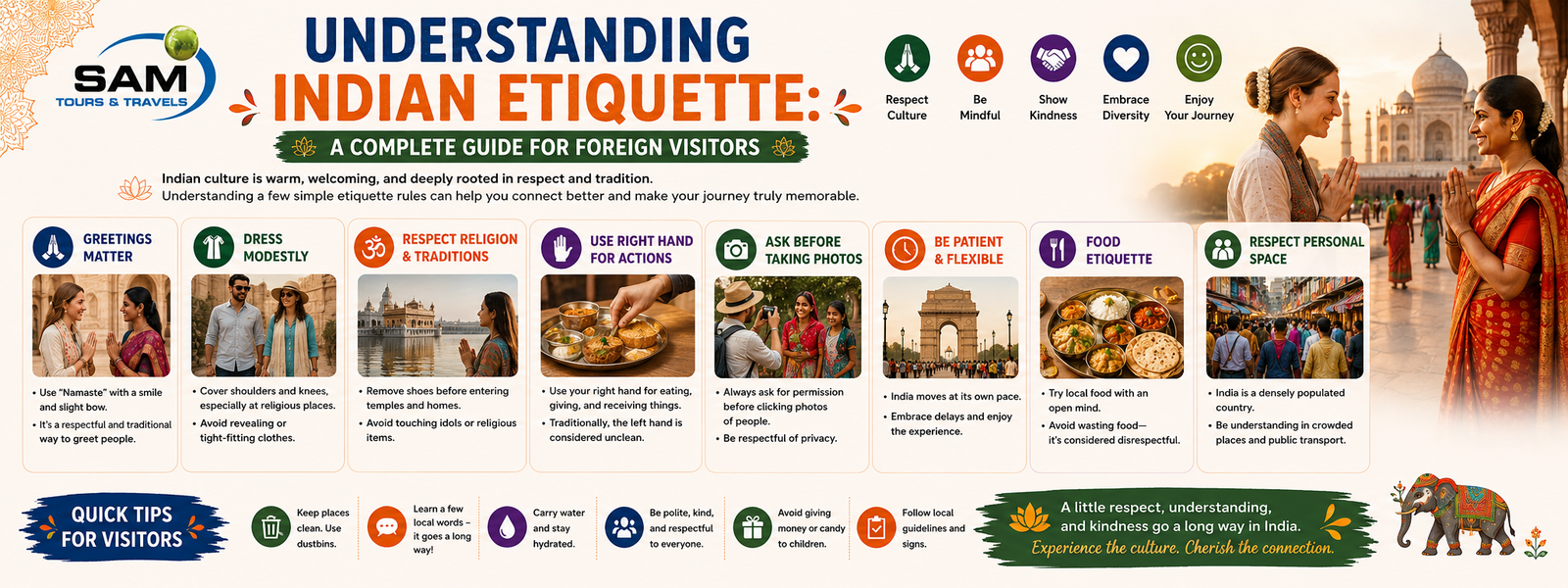
Greetings in India
One of the easiest ways to show respect is through proper greetings.
The Traditional Namaste
“Namaste” is one of the most recognized greetings in India.
It is performed by:
- Bringing your palms together
- Offering a slight nod
- Saying “Namaste”
This greeting is polite, respectful, and widely appreciated.
Handshakes
Handshakes are common in cities, business settings, and tourist areas. However, some people may prefer traditional greetings.
Therefore, it is always helpful to observe and follow the other person’s lead.
Respect for Elders
Respecting older people is a key part of Indian Etiquette.
In many families and communities:
- Elders are greeted first.
- Their opinions are valued.
- Polite language is used when speaking to them.
As a visitor, showing courtesy toward older individuals is always appreciated.
Dress Modestly
India has a wide range of clothing styles, especially in major cities. However, modest attire is generally recommended.
Good choices include:
For Women
- Long dresses
- Loose trousers
- Tunics
- Clothing that covers shoulders
For Men
- Shirts
- T-shirts with sleeves
- Long trousers
Moreover, modest clothing is particularly important when visiting religious sites.
Temple and Religious Site Etiquette
Religious places are important parts of Indian culture.
When visiting temples, mosques, gurudwaras, or churches:
- Remove shoes if required.
- Dress respectfully.
- Remain quiet during ceremonies.
- Follow local instructions.
Consequently, you’ll show respect for worshippers and local traditions.
Dining Etiquette in India
Food plays an important role in social and family life.
Some common customs include:
- Washing hands before meals
- Accepting hospitality graciously
- Waiting until everyone is served
- Showing appreciation for the food
In addition, some people traditionally eat with their right hand.
Using the Right Hand
One of the most important aspects of Indian Etiquette involves hand usage.
Traditionally, the right hand is preferred for:
- Eating
- Giving gifts
- Accepting items
- Greeting people
Therefore, using your right hand whenever possible is considered polite.
Photography Etiquette
India offers incredible photography opportunities.
However, visitors should:
- Ask permission before photographing people
- Respect religious ceremonies
- Follow photography rules at monuments and temples
As a result, you’ll avoid misunderstandings and show cultural sensitivity.
Public Behavior
Polite and respectful behavior is valued throughout India.
Helpful tips include:
- Speak respectfully
- Avoid shouting in public
- Be patient in crowded areas
- Respect personal and religious spaces
Meanwhile, maintaining a friendly attitude usually leads to positive interactions.
Shopping and Bargaining
Shopping is an enjoyable part of traveling in India.
In some markets:
- Bargaining is expected.
- Prices may be negotiable.
- Friendly negotiation is appreciated.
However, bargaining should always remain polite and respectful.
Hospitality in India
Indian hospitality is famous around the world.
Visitors may be offered:
- Tea or coffee
- Snacks
- Meals
- Assistance with directions
Accepting hospitality politely is often appreciated, although a respectful decline is generally understood.
Festival Etiquette
India celebrates numerous festivals throughout the year.
When attending festivals:
- Follow local customs.
- Dress appropriately.
- Participate respectfully.
- Ask questions politely.
As a result, you’ll gain a deeper understanding of local culture.
Common Mistakes Tourists Should Avoid
To respect Indian Etiquette, avoid:
- Wearing inappropriate clothing at religious sites
- Taking photos without permission
- Entering temples with shoes
- Ignoring local customs
- Speaking loudly during ceremonies
Fortunately, a little awareness goes a long way.
Practical Tips for First-Time Visitors
Before your trip:
- Learn a few basic greetings.
- Observe local behavior.
- Dress comfortably and modestly.
- Respect cultural differences.
- Be patient and open-minded.
Most importantly, approach new experiences with curiosity and respect.
Frequently Asked Questions
Is Namaste still commonly used?
Yes. Namaste remains a widely recognized and respectful greeting throughout India.
Do I need to wear traditional Indian clothing?
No. Comfortable and modest Western clothing is perfectly acceptable.
Should I remove my shoes before entering temples?
Yes. Many religious sites require visitors to remove their footwear.
Is bargaining acceptable?
Yes. Bargaining is common in many local markets, but it should always be done politely.
What is the most important rule of Indian Etiquette?
Showing respect for people, traditions, and religious practices is the most important principle.
Conclusion
Understanding Indian Etiquette helps visitors enjoy a more meaningful and respectful travel experience. From greetings and dining customs to temple etiquette and social behavior, small gestures of respect can make a big difference.
Whether you’re exploring Delhi, visiting the Taj Mahal, attending a colorful festival, or discovering Rajasthan’s royal heritage, cultural awareness will help you connect more deeply with the people and traditions that make India such a fascinating destination.
Planning an unforgettable India Tour? Whether you’re looking for a luxury holiday, a cultural journey, a wildlife adventure, or a fully personalized itinerary, our expert travel team can create the perfect experience for you. Explore our wide range of private and customized India tour packages designed to match your interests, budget, and travel style.
👉 Read More: India Tour – Private & Customized India Tour Packages