India is famous for its colorful celebrations, rich culture, and vibrant ceremonies. Among the country’s most spectacular events are its weddings. Indian Wedding Traditions combine family values, religious customs, music, food, and centuries-old rituals that make every celebration unique. For many international visitors, attending an Indian wedding is a once-in-a-lifetime cultural experience.
Whether you’ve been invited to a wedding or are simply curious about Indian culture, this guide explains the most important customs, ceremonies, and traditions you may encounter.
Why Indian Wedding Traditions Are Unique
Unlike many weddings around the world, Indian weddings are often multi-day celebrations involving extended families, friends, and entire communities.
These celebrations are known for:
- Colorful clothing
- Traditional rituals
- Music and dancing
- Lavish decorations
- Family involvement
- Cultural significance
As a result, weddings are considered one of the most important social events in Indian life.
The Importance of Family
Family plays a central role in Indian Wedding Traditions.
In many cases:
- Relatives help organize events.
- Families participate in ceremonies.
- Guests travel from different cities and countries.
- Multiple generations celebrate together.
Therefore, weddings are often seen as a union of families rather than only a union of two individuals.
Pre-Wedding Celebrations
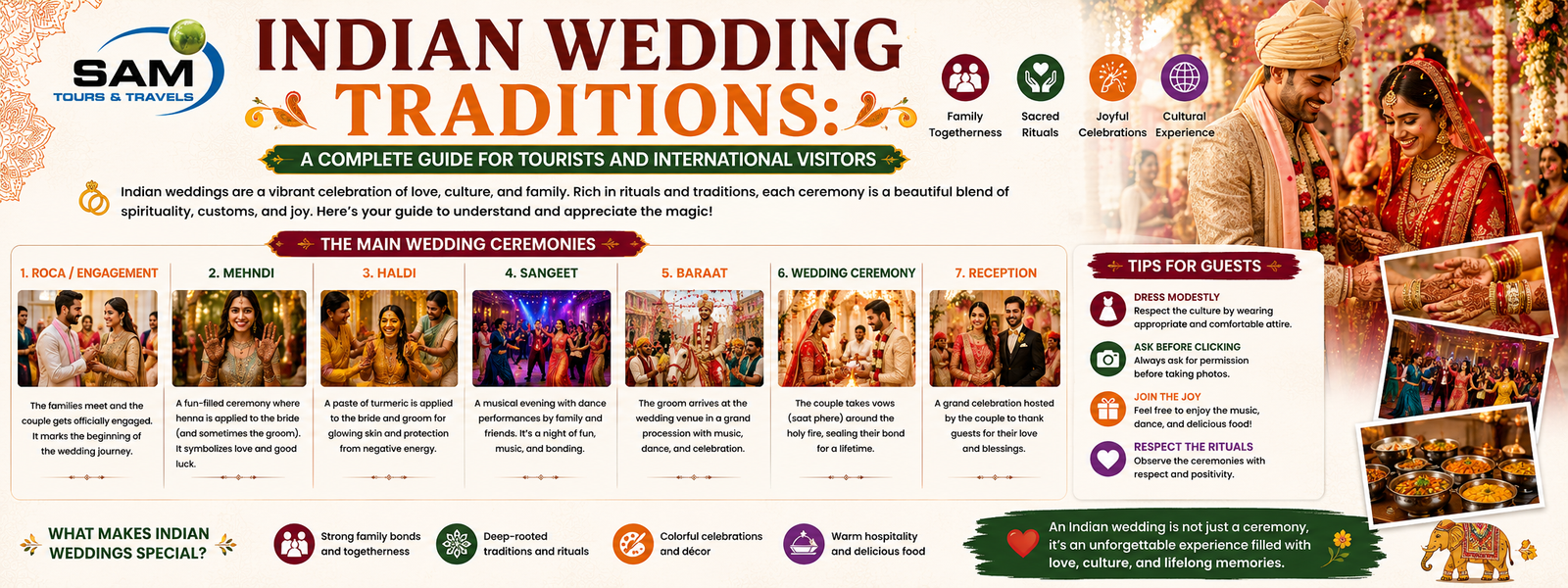
Indian weddings usually begin with several pre-wedding events.
Engagement Ceremony
The engagement marks the official announcement of the marriage.
Families gather to:
- Exchange gifts
- Offer blessings
- Celebrate the upcoming wedding
Mehendi Ceremony
The Mehendi ceremony is one of the most popular traditions.
During this event:
- Intricate henna designs are applied to the bride’s hands and feet.
- Family members and friends often participate.
- Music and dancing accompany the celebration.
The ceremony creates a festive atmosphere before the wedding day.
Sangeet Ceremony
The Sangeet is a joyful evening filled with music and dance.
Highlights include:
- Family performances
- Traditional songs
- Choreographed dances
- Cultural entertainment
As a result, it is often one of the most enjoyable wedding events.
The Wedding Day Ceremony
The wedding day is the centerpiece of all Indian Wedding Traditions.
While customs vary by region and religion, several elements are commonly seen.
The Baraat
The Baraat is the groom’s wedding procession.
Traditionally:
- The groom arrives with family and friends.
- Music and dancing accompany the procession.
- Guests celebrate before the ceremony begins.
This energetic tradition is one of the most exciting parts of the wedding.
The Mandap
The wedding ceremony typically takes place under a decorated structure known as a Mandap.
The Mandap symbolizes:
- Blessings
- Sacred union
- Spiritual commitment
Most key rituals occur beneath this ceremonial canopy.
The Sacred Fire
In many Hindu weddings, a sacred fire serves as a witness to the marriage.
The couple performs rituals around the fire while prayers and blessings are offered.
This ceremony carries deep spiritual significance.
The Seven Steps
One of the most important moments involves the couple taking seven symbolic steps together.
These steps represent promises related to:
- Love
- Respect
- Prosperity
- Family
- Friendship
- Trust
- Lifelong partnership
Consequently, this ritual symbolizes the couple’s commitment to each other.
Traditional Wedding Attire
Indian wedding clothing is famous for its beauty and elegance.
For Brides
Popular choices include:
- Saree
- Lehenga
- Traditional jewelry
- Decorative accessories
Bright colors such as red, pink, and gold are commonly worn.
For Grooms
Traditional attire may include:
- Sherwani
- Kurta
- Turban
- Traditional footwear
Styles vary depending on regional customs.
Food and Hospitality
Food is a major part of Indian Wedding Traditions.
Wedding menus often feature:
- Regional specialties
- Vegetarian dishes
- Traditional sweets
- International cuisine
Guests are encouraged to enjoy the celebration and hospitality.
Wedding Traditions Across India
India’s diversity means wedding customs vary by region.
North India
Known for:
- Grand Baraat processions
- Elaborate decorations
- Multi-day celebrations
South India
Features:
- Traditional temple rituals
- Elegant silk clothing
- Early morning ceremonies
Rajasthan
Famous for:
- Royal-style weddings
- Heritage venues
- Cultural performances
Kerala
Known for:
- Simpler ceremonies
- Traditional attire
- Cultural customs unique to the region
What Tourists Should Know Before Attending
If you’re invited to an Indian wedding:
- Dress appropriately.
- Arrive on time.
- Respect cultural customs.
- Participate in celebrations.
- Accept hospitality graciously.
Most importantly, enjoy the experience and celebrate with the hosts.
Conclusion
Indian Wedding Traditions are among the most vibrant and culturally rich celebrations in the world. From colorful pre-wedding events and traditional ceremonies to music, dancing, and incredible hospitality, every wedding offers a unique glimpse into India’s cultural heritage.
For tourists and international visitors, attending an Indian wedding can be one of the most memorable experiences of a trip to India. It is not only a celebration of marriage but also a celebration of family, community, and tradition.
Planning an unforgettable India Tour? Whether you’re looking for a luxury holiday, a cultural journey, a wildlife adventure, or a fully personalized itinerary, our expert travel team can create the perfect experience for you. Explore our wide range of private and customized India tour packages designed to match your interests, budget, and travel style.
👉 Read More: India Tour – Private & Customized India Tour Packages